

iBeta Datasets for Liveness Detection - L1, L2, L3
Collection
A curated collection of iBeta-compliant biometric datasets for face liveness detection and presentation attack detection (PAD) • 7 items • Updated • 1
Error code: RowsPostProcessingError
Need help to make the dataset viewer work? Make sure to review how to configure the dataset viewer, and open a discussion for direct support.
A silicone mask presentation attack dataset for face anti-spoofing, liveness detection, and biometric face recognition systems. The dataset contains 12,500+ attack videos featuring 18 hyper-realistic silicone masks, designed for training and benchmarking presentation attack detection (PAD) models. Aligned with the ISO/IEC 30107-3 standard for biometric anti-spoofing and suitable for iBeta Level 2 PAD certification preparation
Covers 8 devices, 5 shooting angles, ~40 attribute combinations (wigs, glasses, beards), and diverse real-world environments — offices, apartments, and outdoor locations.
A silicone mask attack is a 3D presentation attack vector against face recognition and liveness detection systems. Unlike 2D paper masks or photo/video replay attacks, high-realism silicone masks reproduce facial geometry, skin texture, and even subtle reflectance properties, defeating many traditional anti-spoofing techniques that rely on 2D texture cues, depth analysis, or basic motion-based liveness detection
Silicone masks are among the hardest presentation attack vectors to detect, which is why they are the primary attack class tested under iBeta Level 2 certification (ISO/IEC 30107-3). Robust face anti-spoofing systems must distinguish silicone masks from genuine faces under realistic capture conditions: varied lighting, distances, devices, and angles
Full dataset is available for commercial licensing — request access on Axon Labs website. This repository contains a preview sample.

Successfull Spoofing attack on a Liveness test by Duobango
Capture Devices (8 models) iPhone 14, iPhone 14 Pro, iPhone 13 Pro, Samsung Galaxy S23, Samsung Galaxy A54, Google Pixel 7, Xiaomi Redmi Note 12 Pro+, Honor 70
Shooting Angles (5 views) Front selfie, back camera close-up, back camera far, left side, right side
Attribute Variations (~40 combinations) Each mask is recorded with combinations of wigs, glasses, beards, and different hairstyles — simulating how real attackers modify mask appearance to bypass detection.
Active Liveness Challenges Videos include natural head movements and blinking to specifically test active liveness detection pipelines that rely on motion-based cues.
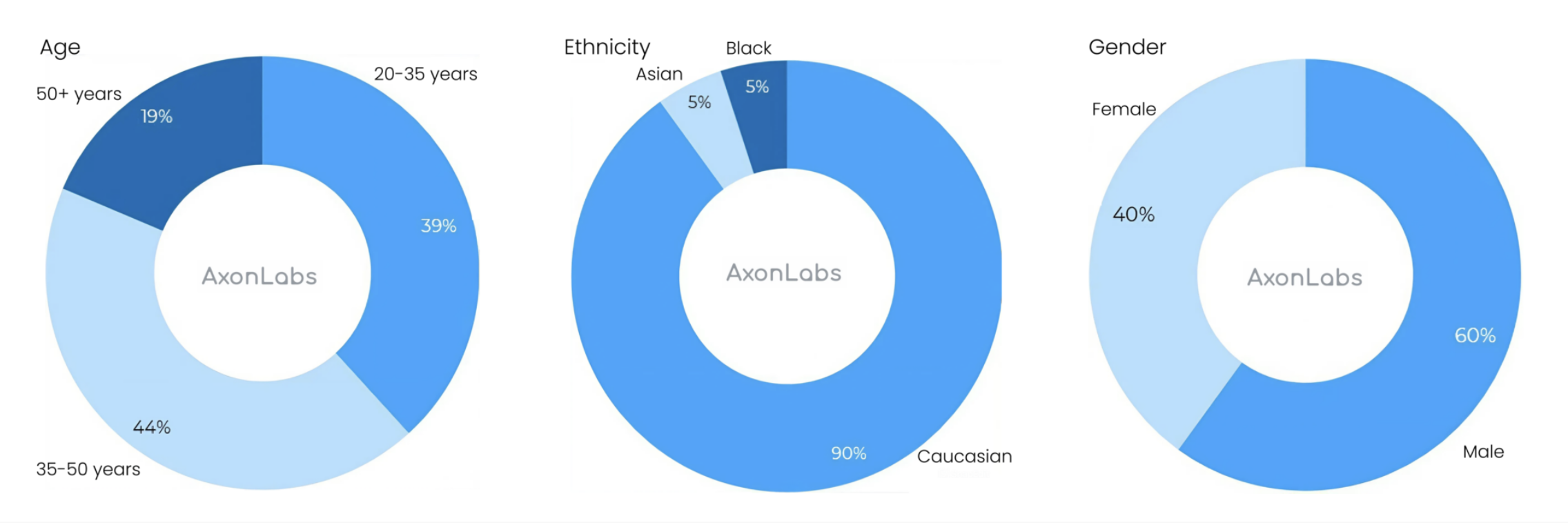
Training PAD classifiers — Use as attack samples paired with your genuine (bona fide) data to train binary or multi-class anti-spoofing models.
Benchmarking liveness detection — Evaluate existing models against high-quality 3D mask attacks to identify failure modes before iBeta testing.
Multi-modal fusion research — Combine with depth, IR, or thermal data to study cross-modal attack detection strategies.
Adversarial robustness testing — The ~40 attribute combinations (glasses, wigs, beards) let you test model robustness against disguise variations.
Researchers familiar with face anti-spoofing literature may know the Idiap CSMAD (Custom Silicone Mask Attack Database) and its extension XCSMAD - the canonical academic benchmarks for silicone mask anti-spoofing research, published by the Idiap Research Institute. This commercial dataset extends that line of work with significantly more silicone masks (18 vs CSMAD's 14), broader demographic and accessory variation (40+ attribute combinations including hairstyles, glasses, wigs, and beards), and modern smartphone capture conditions, designed for production face recognition and liveness detection systems rather than research benchmarks alone